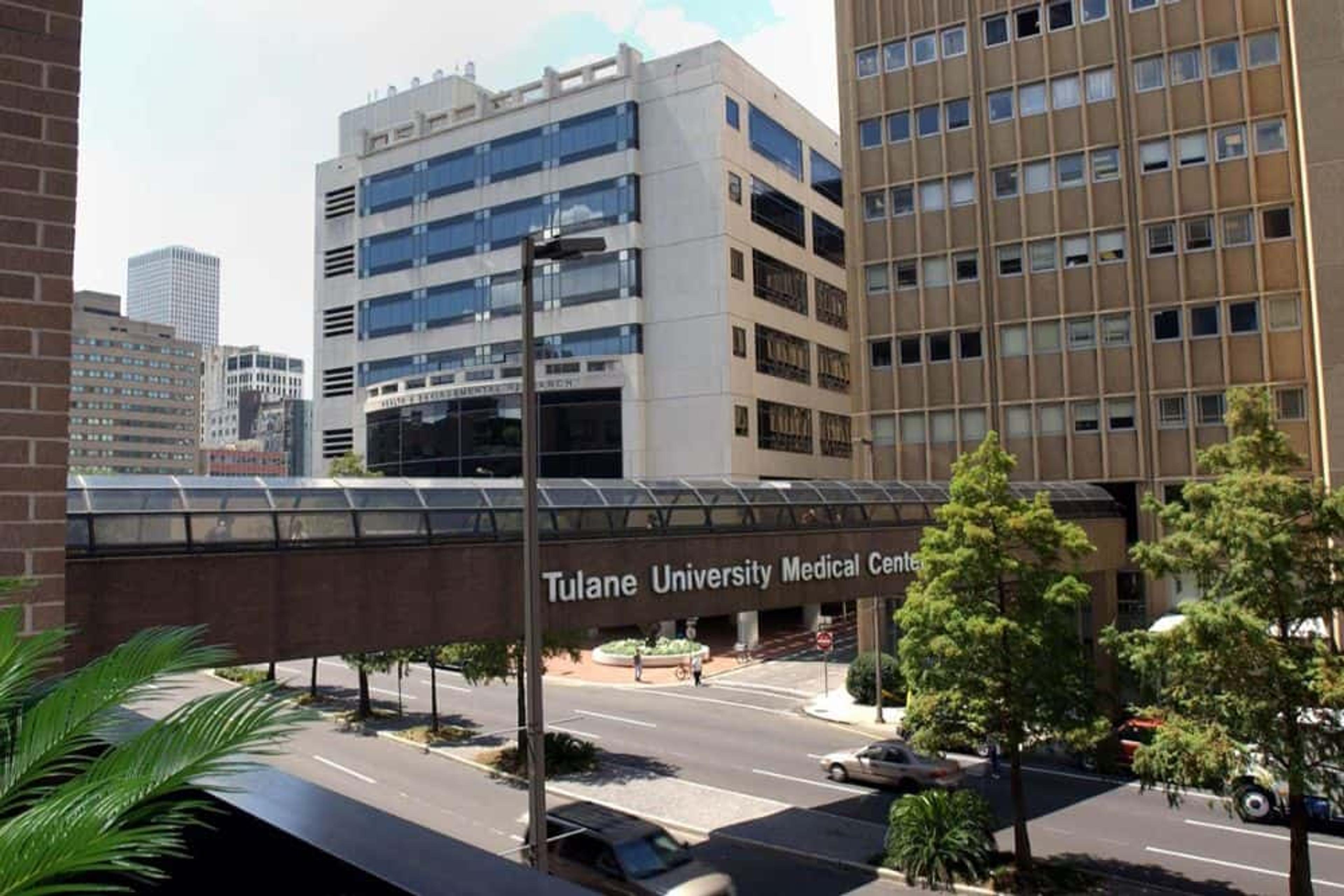
Tulane University School of Medicine offers a four-year MD program in New Orleans. Admissions use mission-aligned review of academics, experiences, service and personal attributes. The MCAT is required; Casper is encouraged but optional. Applicants apply through AMCAS and complete a Tulane secondary application.
- Program
- Allopathic Medicine
- Credential
- MD
- Location
- New Orleans, Louisiana, United States
- Casper
- Optional (recommended)
- Next deadline
- October 1, 2026 (Regular primary application)
- Interview
- One-on-one interviews
- Seats
- 190
- Length
- Four-year MD
Casper Requirement for Tulane University School of Medicine Allopathic Medicine
Tulane University School of Medicine Allopathic Medicine recommends Casper for the 2026-2027 cycle but does not require it: applications are considered with or without a score.
- Languages
- English
- Applicant ID to enter
- AAMC Number or AMCAS ID
- Other Acuity assessments
- Duet (optional (recommended))
Check available Casper test dates in your Acuity Insights account at takecasper.com.
Casper is encouraged, not required. Applications are reviewed and interview invitations issued with or without results. Applicants who choose to test may do so after submitting their application; results are valid for one admissions cycle.
Casper format
Casper is an online, open-response situational judgment test run by Acuity Insights. The current format has 11 scenarios (4 video-response and 7 typed-response) with 2 questions each and takes about 65 to 85 minutes, including optional breaks. Typed-response scenarios allow 3.5 minutes to answer both questions.
Practice with Bright Doctor's Casper Question Bank, featuring 100+ scenarios and 300+ expert responses.
Tulane University School of Medicine Allopathic Medicine Application Deadlines 2026-2027
- Apply through
- AMCAS
- Applications open
- 2027 AMCAS application opened May 5, 2026; submission began May 28, 2026
- Application fee
- $125 Tulane secondary application fee
| What | When |
|---|---|
| Early-decision primary application | August 1, 2026passed |
| Early-decision secondary application and supporting documentation | August 1, 2026passed |
| Regular primary application | October 1, 2026upcoming |
| Regular secondary application and supporting documentation | November 1, 2026upcoming |
Tulane favors early applications screened by dedicated staff. Complete secondaries promptly after invitation.
Tulane University School of Medicine Allopathic Medicine Admissions Statistics
Period: Class of 2030
- Seats / class size: 190
- Applicants: 15,877 AMCAS applications
- Interviewed: Approximately 600 applicants invited annually
- Average GPA: 3.71 undergraduate GPA
- Average test score: MCAT 509
- Community service before matriculation: More than 97,000 hours across the Class of 2030
- Research before matriculation: More than 176,000 hours across the Class of 2030
Class of 2030 figures describe enrolled students, not admissions thresholds.
Eligibility Requirements for Tulane University School of Medicine Allopathic Medicine
- Degree / credits
An undergraduate degree from a regionally accredited institution is highly encouraged by matriculation; U.S. or Canadian degrees from nonaccredited institutions are not eligible.
- Citizenship
Applicants are considered regardless of citizenship or immigration status, including international and DACA applicants
- Language proficiency
TOEFL is not required; all applicants must take the MCAT.
MCAT within three years of the application cycle or four years of matriculation.
Other requirements
- Letters of recommendation: Tulane prefers three letters or a committee letter or packet containing three letters; at least one letter must be from someone with a science or medical background.
- Technical standards and disclosures: Candidates must meet Tulane's technical standards and disclose and explain any felony offense or disciplinary action before matriculation.
Selection Factors Tulane University School of Medicine Considers
Prerequisites
| Course | Requirement |
|---|---|
| Biology | recommended Not required |
| Physics | recommended Not required |
| Chemistry | recommended Not required |
| Behavioral and social sciences | recommended Not required |
| Laboratory or field experiences | recommended Not required |
| Biochemistry | recommended Not required |
| Mathematics | recommended Not required |
| Psychology | recommended Not required |
| Expository writing | recommended Not required |
| Sociology | recommended Not required |
| Genetics | recommended Not required |
| Statistics | recommended Not required |
GPA
- How it is calculated
AMCAS cumulative undergraduate GPA, including post-baccalaureate coursework; graduate GPA is considered separately
- Minimum
- No minimum GPA for a secondary application or interview invitation
- Competitive
- No single competitive GPA cutoff; Tulane publishes MCAT-GPA ranges for applicants encouraged to apply.
Tulane encourages applications with undergraduate GPA of 3.80+ alongside MCAT 497-500, 3.60+ alongside 500-504, or 3.30+ alongside 505+. These are not minimums for a secondary application or interview invitation.
Admissions tests
- MCAT (required): Tulane considers the highest eligible total score, not subsection scores. Take the MCAT within three years of the application-cycle year or four years of matriculation; for this cycle, scores from 2023 onward meet the stated age rule. There is no MCAT threshold for a secondary application or interview invitation.
- TOEFL (not required): TOEFL scores are not required.
Experience and volunteer hours
Recommended.
Tulane values sustained community service, clinical activity, leadership and scholarly activity; it publishes no minimum volunteer or work hours.
Supplementary application
All applicants whose verified AMCAS application reaches Tulane receive an electronic secondary application. A complete file includes the primary and secondary applications, fee, MCAT score and letters of recommendation.
How applicants are ranked
Tulane uses mission-aligned review. Complete files are screened with particular attention to academic records and letters, alongside experiences and service. Interview reports join the file before full-committee review; offers, acceptance-range placement and rejections are decided without a mathematical formula.
Interview Format at Tulane University School of Medicine
Format: One-on-one interviews
Virtual interviews with a faculty member or administrator and a current Tulane medical student, plus a standardized-patient exercise. Interviews are informal and blind, although the faculty member or administrator may review the personal statement and secondary application.
- Who is invited
- Applicants selected after review of a complete application; approximately 600 are invited annually
- When
- August through late February or early March; invitations are emailed
Practice under timed, realistic conditions with Bright Doctor's AI Interview Simulator.
Prepare for Casper and Your Interview
Access Bright Doctor's Casper Question Bank with 100+ scenarios and 300+ expert-crafted responses, AI Interview Simulator with realistic practice conditions, and personalized mentorship from current medical students, all on one web-based platform.
Start Practicing FreeCurriculum at Tulane University School of Medicine Allopathic Medicine
- Program length
- Four-year MD
- Structure
Phase I on normal structure and function via systems-based modules integrating anatomy, physiology, histology, and more. Longitudinal elements emphasize free clinic involvement.
- Campuses
- New Orleans
Year one includes Fundamentals in Human Biology; Gross, Developmental, and Radiological Anatomy; Biochemistry; Histology; Medical Genetics; and Foundations in Medicine I. Later modules cover Brain, Mind, and Behavior; Endocrinology/Reproduction; and USMLE preparation with two-week blocks. The structure builds toward clinical skills for specialty fields.
Campus and facilities
Located in New Orleans, the campus supports extensive clinical affiliations and a free clinic network. Post-Katrina resilience shapes a committed learning environment. Students value premed resources preparing them for unique experiences unavailable elsewhere.
Tuition and Funding at Tulane University School of Medicine
- 2026-27 MD tuition, per semester: $38,566
- 2026-27 mandatory fees, per semester: $2,325
These are Tulane's published Fall 2026 and Spring 2027 rates; Fall 2027 rates are not shown here. Housing, insurance and other costs are additional.
Tulane University School of Medicine's Mission and Values
Tulane University School of Medicine seeks applicants with diverse life experiences through rigorous academics in sciences and humanities. The vision prepares physicians for any specialty via integrated knowledge, skills, and behaviors.
We seek out applicants who have a wealth of life experiences. This requires a rigorous interdisciplinary pursuit of academics and of sciences and humanities.
What Applicants Are Saying
Matriculated students describe a program culture that values well-established free clinic networks and location advantages in New Orleans. Students report Tulane's strong match list, especially for surgery residencies. Students rate Tulane's interview experience highly among cycles. Matriculants highlight surgery match success, top-tier interview days, and community service via clinics. New Orleans' vibrant setting enhances work-life balance. Students report positive interview experiences emphasizing personal discussions.
Shared by applicants and students on forums and communities. It is anecdotal, not official program information.
How to Prepare Your Tulane University School of Medicine Allopathic Medicine Application
- Check Tulane's recommended coursework and MCAT score-age rule.
- Submit AMCAS and the Tulane secondary promptly for rolling review.
- Describe sustained service, clinical activity and leadership.
- If choosing to take Casper, register through Acuity Insights; it is not required for review or interview.
- Prepare for virtual conversations with a faculty member or administrator and a medical student, plus a standardized-patient exercise.
More About Tulane University School of Medicine Allopathic Medicine
- Match list
Strong match list, particularly in surgery
- Student life
Engage early in Tulane's network for residency advantages
Frequently Asked Questions About Tulane University School of Medicine Allopathic Medicine
Is Casper required for Tulane University School of Medicine?
No. Tulane encourages Casper but reviews applications and invites applicants to interview without results.
What is the average GPA for Tulane School of Medicine admissions?
The Class of 2030 averaged a 3.71 undergraduate GPA. Tulane has no minimum GPA for a secondary application or interview invitation.
Does Tulane University School of Medicine require the MCAT?
Yes. Tulane requires the MCAT and considers the highest eligible total score; the Class of 2030 averaged 509.
What is the interview format at Tulane School of Medicine?
Interviews are virtual. Invitees meet a faculty member or administrator and a current medical student and complete a standardized-patient exercise.
What are Tulane University School of Medicine tuition costs?
Published MD tuition is $38,566 per semester, plus mandatory fees. Consult the tuition section for the applicable rate period.
Can international students apply to Tulane MD program?
Yes. International and DACA applicants may apply and receive full review regardless of citizenship or immigration status. International students must show proof of funds for one year of tuition before admission.
How competitive is Tulane University School of Medicine?
Tulane reports 15,877 AMCAS applications for the 190-student Class of 2030. It has no minimum GPA or MCAT threshold for interview consideration.
What is the Tulane School of Medicine curriculum like?
Phase I uses systems-based modules like anatomy and physiology; includes USMLE prep blocks. Emphasizes clinical skills early.
Sources
- Tulane MD Admissions Process
- Tulane CASPer and DUET Test
- Tulane Timelines & Deadlines
- Tulane MD Admissions
- Tulane Class Profile
- Tulane FAQs
- Tulane MD Tuition and Fees
- AAMC 2027 Application Dates
Last updated: September 26, 2026