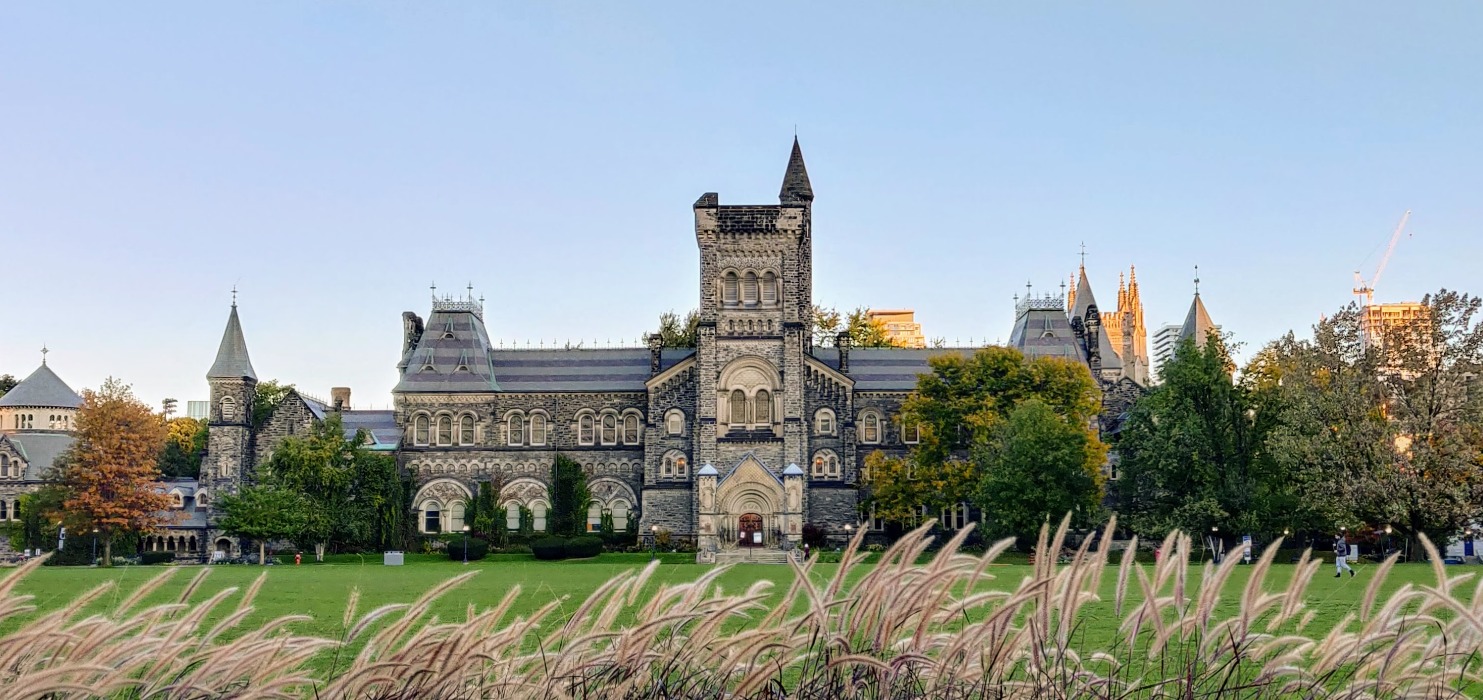
U of T’s two-campus MScOT is a full-time occupational therapy program. Applicants apply through ORPAS with a bachelor’s degree, qualifying grades, personal submissions, a resumé, references and Casper. Volunteer hours are not required. Admitted students generally need Canadian citizenship or permanent residency, with an exception for those eligible for U of T’s international-fee exemption.
- Program
- Master of Science in Occupational Therapy (MScOT)
- Credential
- MScOT
- Location
- Toronto, Ontario, Canada
- Casper
- Required
- Seats
- Approximately 90 at St. George and 40 at Mississauga
- Length
- 24 months
Casper Requirement for University of Toronto Occupational Therapy
University of Toronto Occupational Therapy requires Casper for the 2026-2027 cycle.
- Languages
- English
- Applicant ID to enter
- OUAC/ORPAS ID
Check available Casper test dates in your Acuity Insights account at takecasper.com.
Complete Casper, add U of T MScOT to your score distribution list, use the same email address for ORPAS and Acuity Insights, and update your Acuity account when you receive your ORPAS Reference Number. Check Acuity Insights for available sittings.
Casper format
Casper is an online, open-response situational judgment test run by Acuity Insights. The current format has 11 scenarios (4 video-response and 7 typed-response) with 2 questions each and takes about 65 to 85 minutes, including optional breaks. Typed-response scenarios allow 3.5 minutes to answer both questions.
Practice with Bright Doctor's Casper Question Bank, featuring 100+ scenarios and 300+ expert responses.
University of Toronto Occupational Therapy Application Deadlines 2026-2027
- Apply through
- ORPAS
- Applications open
- Fall 2026; exact date not published.
Apply through ORPAS. Complete the Personal Submissions questions, upload your resumé, and arrange two references using ORPAS Confidential Assessment Forms. Add U of T MScOT to your Casper distribution list and match the email address on both accounts.
University of Toronto Occupational Therapy Admissions Statistics
Period: Current program description; approximate annual figures
- Seats / class size: Approximately 90 at St. George and 40 at Mississauga
- Applicants: Approximately 1,000 per year
Eligibility Requirements for University of Toronto Occupational Therapy
- Degree / credits
An appropriate bachelor’s degree or equivalent from a recognized university is required before registration. Final-year students may apply; applicants need at least 10 full-course equivalents of university study to be considered.
- Citizenship
Admitted students generally must be Canadian citizens or permanent residents. U of T also permits admitted students who qualify under its international-fee exemption list to register.
There are no specific prerequisite courses. Applicants should research the OT profession; prior study in statistics, vertebrate physiology or biology, and psychology may help with the program.
Other requirements
- Health and first-aid documentation after acceptance: Before registration and fieldwork, complete the Rehabilitation Sciences Health Form and provide required vaccination and TB records, current HCP/BLS CPR certification, and Emergency or Standard First Aid certification.
- Placement screening: Some placement facilities require a satisfactory police record check or vulnerable sector screening.
Selection Factors University of Toronto Considers
GPA
- How it is calculated
U of T assesses the ORPAS sub-GPA from the most recent 10 full-course equivalents of eligible undergraduate university study. ORPAS converts grades to its 4.0 scale; where part of an academic year is needed, it uses that full year’s average.
- Minimum
- Minimum mid-B average in the final year (5 full-course equivalents) of the bachelor’s degree.
- Competitive
- U of T says successful applicants’ entering sub-GPA tends to range from 3.70 to 3.80 on the 4.0 ORPAS scale; this is not a cutoff.
One applicant with a 2.93 GPA on a 4.0 scale questioned competitiveness; accepted students advise focusing on upward trends and contextual factors.
Admissions tests
- English-language proficiency test (required for some applicants): Required if English is not your first language and you have not completed a program taught and examined in English. U of T recommends TOEFL: 100 iBT, or 600 paper-based with TWE 5; other tests accepted by its School of Graduate Studies may qualify.
Experience and volunteer hours
Recommended.
Volunteer experience is not required, and there is no required number of hours. Research the OT profession; exposure through coursework, paid or volunteer work, observation, or job shadowing is recommended. Relevant transferable skills can also come from work outside health care.
Supplementary application
Complete the ORPAS Personal Submissions questions and upload a resumé of no more than 2 pages. Submit 2 Confidential Assessment Forms with reference letters; one academic reference is required unless you qualify as a mature applicant. Discuss your understanding of OT and relevant transferable skills.
How applicants are ranked
Applicants are assessed on academic and non-academic materials, with academic grades weighted more heavily. Required materials include personal submissions, a resumé, references and Casper. The Admissions Committee may request an interview; no interview ranking formula is published.
Interview Format at University of Toronto
An interview is not routinely required; the Admissions Committee may request one.
- Who is invited
- Applicants selected at the Admissions Committee’s request.
- When
- Not published.
Practice under timed, realistic conditions with Bright Doctor's AI Interview Simulator.
Prepare for Casper and Your Interview
Access Bright Doctor's Casper Question Bank with 100+ scenarios and 300+ expert-crafted responses, AI Interview Simulator with realistic practice conditions, and personalized mentorship from current medical students, all on one web-based platform.
Start Practicing FreeCurriculum at University of Toronto Occupational Therapy
- Program length
- 24 months
- Structure
Full-time, in-person study over 6 consecutive terms, combining occupational therapy coursework, research and fieldwork. Students complete at least 1,000 hours of fieldwork.
- Campuses
- St. George, Mississauga
The curriculum emphasizes evidence-based practice and interprofessional education. Matriculated students describe a rigorous yet supportive environment focused on real-world application. Fourth-year applicants from social work backgrounds find the transition feasible with strong foundational skills.
Campus and facilities
MScOT operates at U of T’s St. George and Mississauga campuses. Applicants are considered for both and may state a preference, but campus assignment is not guaranteed; admitted students remain at their assigned campus.
Tuition and Funding at University of Toronto
MScOT charges a program fee for each year rather than by course. The published 2026-27 domestic annual tuition is CAD $10,760, excluding incidental fees; tuition for entry in fall 2027 is not yet published.
What Applicants Are Saying
Matriculated students report acceptance with a Q2 Casper score, indicating flexibility beyond top quartiles. First-year OT students at U of T report gaining admission with Q2 Casper scores, as did several peers. One applicant with a 2.93 GPA on a 4.0 scale questioned competitiveness, but accepted students advise focusing on upward trends and contextual factors. Students transitioning from social work or related fields succeed by linking prior roles to OT competencies. Matriculated students describe a rigorous yet supportive environment focused on real-world application. Fourth-year applicants from social work backgrounds find the transition feasible with strong foundational skills.
Shared by applicants and students on forums and communities. It is anecdotal, not official program information.
How to Prepare Your University of Toronto Occupational Therapy Application
- Check your ORPAS sub-GPA against the most recent 10 full-course equivalents.
- Research OT through study, work, observation or lived experience; no volunteer-hour target applies.
- Draft personal submissions that explain your understanding of OT and transferable skills.
- Prepare a two-page resumé and arrange two eligible references.
- Check Acuity Insights for U of T MScOT Casper sittings and add the program to your distribution list.
Frequently Asked Questions About University of Toronto Occupational Therapy
Is Casper required for University of Toronto Occupational Therapy?
Yes. Complete Casper and add U of T MScOT to your distribution list.
What GPA do I need for U of T MScOT?
The minimum is a mid-B final-year average; U of T says successful applicants’ sub-GPA tends to be 3.70 to 3.80.
Can international students apply to University of Toronto Occupational Therapy?
Registration generally requires Canadian citizenship or permanent residency, with an international-fee-exemption exception.
What are the Casper test dates for U of T OT?
Check Acuity Insights for U of T MScOT’s available sittings.
Does University of Toronto OT require interviews?
Not routinely. The Admissions Committee may request an interview.
What volunteer experience is needed for U of T Occupational Therapy?
None is required. Exposure to OT is recommended, and relevant skills may come from paid or unrelated work.
How competitive is University of Toronto MScOT admissions?
U of T reports about 1,000 applicants per year for approximately 130 places. Academic grades are weighted more heavily than non-academic materials.
Where do I apply for U of T Occupational Therapy?
Apply through ORPAS.
Sources
- U of T MScOT
- U of T Application Procedure
- ORPAS U of T requirements
- ORPAS Key Dates
- U of T Admission Selection
- U of T SGS Occupational Therapy
- U of T Tuition Fee Report
- Acuity Insights Dates and Fees
Last updated: September 26, 2026