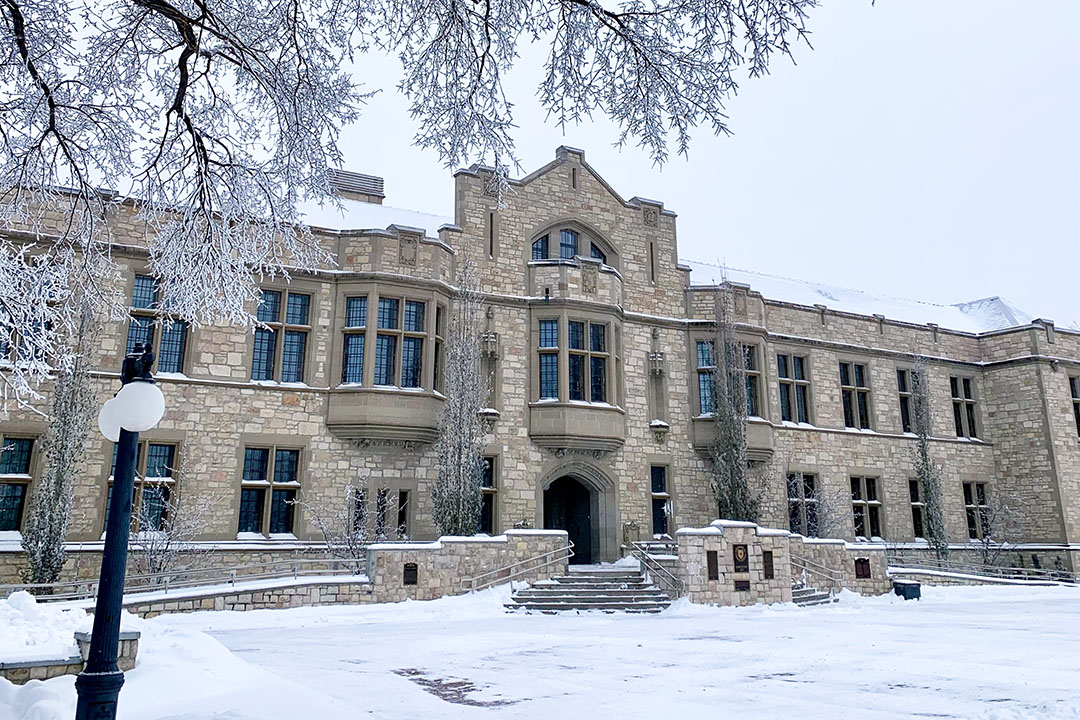
The University of Saskatchewan offers a four-year Doctor of Dental Medicine program in Saskatoon. Admission requires university study, specified pre-dentistry courses and the DAT. Competitive applicants may be invited to a multiple mini interview; Casper is not required. Saskatchewan residency and other admission categories have distinct rules.
- Program
- Doctor of Dental Medicine (DMD)
- Credential
- DMD
- Location
- Saskatoon, Saskatchewan, Canada
- Casper
- Not required
- Next deadline
- November 15, 2026 (DMD application and fee deadline)
- Interview
- Multiple mini interview (MMI)
- Seats
- 36
- Length
- Four years, full time, after the required university study
Casper Requirement for University of Saskatchewan Dentistry
University of Saskatchewan Dentistry does not require Casper for the 2026-2027 cycle.
Casper is not required for DMD admission.
University of Saskatchewan Dentistry Application Deadlines 2026-2027
- Apply through
- USask online application portal for Canadian citizens and permanent residents; ADEA AADSAS for international DMD applicants
- Applications open
- August 1, 2026
- Application fee
- $216 CAD, non-refundable
| What | When |
|---|---|
| DMD application and fee deadline | November 15, 2026upcoming |
| Supporting documents deadline | December 1, 2026upcoming |
| Term 2 prerequisite enrolment confirmation, if applicable | January 15, 2027upcoming |
| Final transcripts, if offered admission | June 5, 2027upcoming |
| Criminal record check, if offered admission | August 24, 2027upcoming |
Submit official post-secondary transcripts directly from each institution attended outside USask, an official DAT report, and applicable proof of residency, Indigenous membership or citizenship, permanent residence, English proficiency, or prerequisite enrolment.
University of Saskatchewan Dentistry Admissions Statistics
Period: 2026-2027 academic year
- Seats / class size: 36
- Applicants: 511
- Average GPA: 93.54% (admitted applicants; Indigenous applicants excluded)
- Average test score: DAT mean average score: 22.78 (Indigenous applicants excluded)
- Saskatchewan applicants: 118
- Out-of-province applicants: 368
- Saskatchewan admitted-applicant mean academic average, excluding Indigenous applicants: 92.80%
- Out-of-province admitted-applicant mean academic average, excluding Indigenous applicants: 94.94%
The 511 total applications include Indigenous and foreign-trained dentist applicants. The published admitted-applicant academic and DAT averages exclude Indigenous applicants.
Eligibility Requirements for University of Saskatchewan Dentistry
- Degree / credits
Complete three 30-credit-unit academic years toward an undergraduate degree, totaling 90 credit units.
- Residency
Saskatchewan applicants receive consideration in a resident category. Generally, residency requires four years in Saskatchewan immediately before the admission year's residency assessment date. Other rules, including long-term prior residence, are detailed in the admissions guide.
- Citizenship
Canadian citizens and permanent residents apply to the DMD through the USask portal. International DMD applicants apply through ADEA AADSAS. The separate International Dental Degree Program requires Canadian citizenship or permanent residence.
- Language proficiency
Applicants whose primary language is not English must provide acceptable evidence of English proficiency.
Admission pathways
- International Dental Degree Program (IDDP): A separate two-year DMD pathway for graduates of dental programs not recognized by CDAC. Applicants must be Canadian citizens or permanent residents; up to 10 are admitted annually.
- Dental-related master's pathway to DMD: An alternative DMD admission category for eligible Saskatchewan residents holding a dental-related master's degree.
Other requirements
- Adult criminal-record self-declaration: Required on the application.
- Criminal Record Check with Vulnerable Sector Screening: If admitted, complete after the offer and submit by the applicable deadline.
- Immunization documentation: If admitted, provide proof by the date in the offer letter.
- Indigenous membership/citizenship verification: Required to be considered for a designated Indigenous seat.
Selection Factors University of Saskatchewan Considers
Prerequisites
| Course | Requirement |
|---|---|
| Biology | 6 credit units |
| General Chemistry | 3 credit units |
| Organic Chemistry | 3 credit units |
| General Physics | 3 credit units |
| Biomolecules Biochemistry | 3 credit units |
| Metabolism Biochemistry | 3 credit units |
| Human Physiology | 6 credit units |
| Microbiology | 3 credit units |
| Basic Nutrition | 3 credit units |
| Social Sciences/Humanities | 6 credit units |
GPA
- How it is calculated
Cumulative weighted average of the two best academic years, each containing at least 30 credit units; coursework in the application year is excluded from that calculation.
- Minimum
- 75%
Maintain at least 75% overall during the application year and at least 70% in each prerequisite taken that year. The minimum average does not guarantee admission.
Admissions tests
- Canadian Dental Aptitude Test (DAT) (required): Use your single best overall DAT from February 1, 2024 to November 30, 2026. Minimum scores: Academic Average 15, Perceptual Ability 14, Reading Comprehension 14. November 2026 results are due when available.
Supplementary application
No DMD essay prompts are listed among the required application documents; submit the application and required supporting documents through the designated process.
How applicants are ranked
Interview selection uses the two-best-year academic average and best overall DAT score. Final selection weights the academic average 65%, DAT 15%, and interview 20%; applicants must meet prerequisite, average and DAT minimums.
Interview Format at University of Saskatchewan
Format: Multiple mini interview (MMI)
The MMI has stations lasting 10 minutes each: two minutes to read and prepare, followed by eight minutes discussing the response with an interviewer.
- Who is invited
- Competitive eligible applicants selected using their two-best-year academic average and best overall DAT score.
- When
- February/March 2027
Practice under timed, realistic conditions with Bright Doctor's AI Interview Simulator.
Prepare for Your Admissions Interview
Access Bright Doctor's AI Interview Simulator with realistic practice conditions and personalized mentorship from current medical students, all on one web-based platform.
Start Practicing FreeCurriculum at University of Saskatchewan Dentistry
- Program length
- Four years, full time, after the required university study
- Structure
Students must pass all courses in each year to advance, emphasizing progressive competency. Early years focus on pre-clinical training; later phases shift to clinical practice with hands-on patient care. All pathways enforce strict progression standards.
- Campuses
- Saskatoon
The DMD progresses through preclinical and clinical dentistry; the separate IDDP begins with a summer essential-skills course before students join the later years of the DMD.
Campus and facilities
Located in Saskatoon, Saskatchewan, the College of Dentistry features a dedicated pre-clinical teaching area with advanced simulation labs mimicking real clinics. These facilities support technique mastery before patient interactions.
Tuition and Funding at University of Saskatchewan
- Year 1 estimated total, Saskatchewan student: $63,478.66 CAD
- Year 1 estimated total, out-of-province student: $85,943.66 CAD
- Year 1 estimated total, international student: $153,337.66 CAD
Estimates include tuition, program and student fees, and equipment rental; amounts may change.
What Applicants Are Saying
Students report success through mock interviews simulating MMI conditions. Student forums on SDN highlight a focused environment, though the program's intensity demands strong time management. Matriculated students describe a collaborative culture amid competitiveness, with access to research opportunities in dental sciences.
Shared by applicants and students on forums and communities. It is anecdotal, not official program information.
How to Prepare Your University of Saskatchewan Dentistry Application
- Check completion of three 30-credit-unit academic years and all required pre-dentistry courses.
- Calculate the weighted average of your two best academic years and check prerequisite grades.
- Take the DAT within the accepted testing period and check all three section minimums.
- If invited, practise MMI responses with two minutes of preparation and eight minutes of discussion.
- Arrange official transcripts and applicable supporting documents before their deadlines.
Frequently Asked Questions About University of Saskatchewan Dentistry
Is Casper required for University of Saskatchewan Dentistry?
No. The DMD admissions requirements list the DAT and interview, not Casper.
What GPA do I need for University of Saskatchewan Dentistry?
At least a 75% cumulative weighted average across your two best academic years is required. You must also meet the prerequisite-course average requirement.
What is the interview format for University of Saskatchewan Dentistry?
The MMI uses 10-minute stations: two minutes to prepare and eight minutes to discuss your response.
How many spots are available at University of Saskatchewan Dentistry?
The college says it admits 36 DMD students each year.
Can international students apply to University of Saskatchewan Dentistry?
International DMD applicants are directed to ADEA AADSAS. The separate IDDP is for eligible foreign-trained dentists who are Canadian citizens or permanent residents.
What are the Casper test dates for University of Saskatchewan Dentistry?
There are no DMD Casper test dates because Casper is not required.
Does University of Saskatchewan Dentistry require prerequisite courses?
Yes. Applicants need 39 credit units of specified pre-dentistry courses with at least a 70% overall prerequisite average.
How competitive is University of Saskatchewan Dentistry admissions?
The college reports 511 applications in its published admission statistics; its DMD class size is 36.
Sources
- USask Dentistry admissions
- USask DMD Admissions Information Guide 2027-2028
- USask DMD admission statistics 2026-2027
- USask International Dentistry admissions
- USask IDDP Admissions Information Guide 2027-2028
Last updated: September 26, 2026