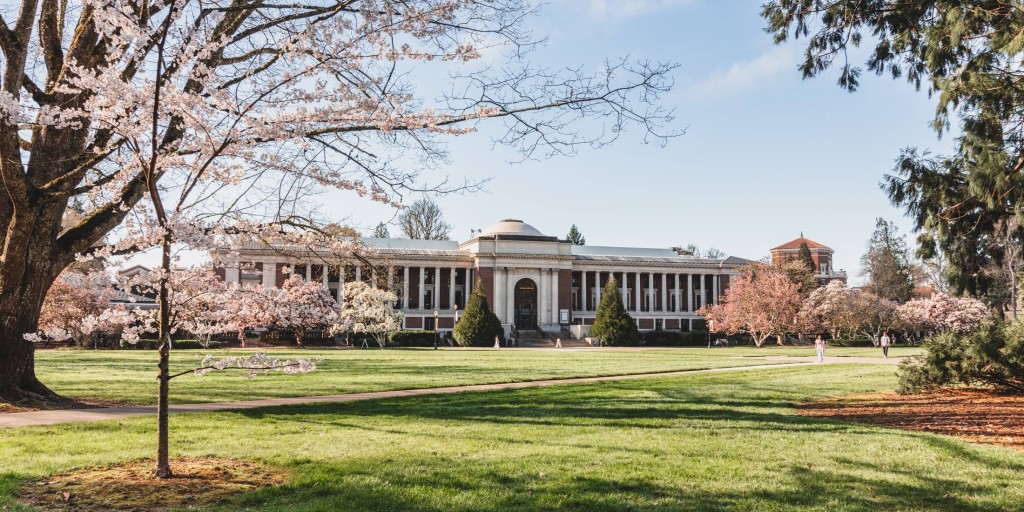
Oregon State University’s in-person DVM program in Corvallis emphasizes comparative biology and medicine. Applicants apply through VMCAS and must complete Casper. Admission requires a VMCAS-calculated science GPA of at least 3.0 and the specified prerequisite courses; the published selection criteria do not specify an interview format.
- Program
- Doctor of Veterinary Medicine (DVM)
- Credential
- DVM
- Location
- Corvallis, Oregon, United States
- Casper
- Required · CSP-20100
- Seats
- 96 positions
- Length
- Four years
Casper Requirement for Oregon State University Veterinary Medicine
Oregon State University Veterinary Medicine requires Casper for the 2027-2028 cycle.
- Test to book
- US Casper 2 · CSP-20100
Check available Casper test dates in your Acuity Insights account at takecasper.com.
Casper is required. Test and score-distribution dates for fall 2028 entry have not been published.
Casper format
Casper is an online, open-response situational judgment test run by Acuity Insights. The current format has 11 scenarios (4 video-response and 7 typed-response) with 2 questions each and takes about 65 to 85 minutes, including optional breaks. Typed-response scenarios allow 3.5 minutes to answer both questions.
Practice with Bright Doctor's Casper Question Bank, featuring 100+ scenarios and 300+ expert responses.
Oregon State University Veterinary Medicine Application Deadlines 2027-2028
- Apply through
- VMCAS
- Applications open
- Not yet published
- Application fee
- $60 OSU supplemental fee, paid through the applicant portal; applicants with an approved VMCAS fee waiver may request an OSU supplemental-fee waiver.
Send official transcripts from every institution directly to VMCAS. Applications missing transcripts or VMCAS verification will not be reviewed.
Oregon State University Veterinary Medicine Admissions Statistics
Period: Class of 2029
- Seats / class size: 96 positions
- Applicants: 1,762 applications
- Average GPA: 3.76 overall
- Science GPA: 3.74
- Prerequisite GPA: 3.72
- Last 45 credit GPA: 3.82
The published Class of 2029 totals include 49 Oregon-resident, 46 nonresident and 1 WICHE position.
Eligibility Requirements for Oregon State University Veterinary Medicine
- Degree / credits
A bachelor’s degree is not required; applicants must complete the prerequisite courses.
- Residency
Oregon residents and nonresidents may apply; approximately 48 places are allocated to each group, including WICHE-sponsored places among the nonresident positions.
- Language proficiency
Applicants from a non-English-speaking country must submit TOEFL results.
A verified VMCAS application and a science GPA of at least 3.0 are required for review.
Other requirements
- Prerequisite completion: No more than two prerequisites may be planned or in progress when applying; complete all prerequisites by August 1 of the entry year.
- Final transcripts: Accepted students must ensure final academic transcripts reach the college by August 15 of the entry year.
Selection Factors Oregon State University Considers
Prerequisites
| Course | Requirement |
|---|---|
| Introductory Biology | 2 semester or 3 quarter courses |
| General Chemistry | 2 semester or 3 quarter courses with labs |
| Organic Chemistry | 1 semester or 2 quarters |
| Genetics | 1 course covering Mendelian and molecular genetics |
| Mathematics | College pre-calculus or higher |
| Physics | 2 semester or 2 quarter courses for science majors |
| Physiology | 1 animal or human physiology course |
| Statistics | 1 course |
| Advanced Biological Sciences | 1 additional semester or 2 additional quarters of upper-division biology, with at least one lab |
| Biochemistry | 1 semester or 2 quarters of upper-division biochemistry |
| English writing | 4 semester or 6 quarter credits Fulfilled by a bachelor’s degree. |
| Public speaking | 1 semester or quarter course Fulfilled by a bachelor’s degree. |
| Humanities or social sciences | 8 semester or 12 quarter credits Fulfilled by a bachelor’s degree. |
GPA
- How it is calculated
Overall and science GPAs are calculated via VMCAS.
- Minimum
- 3.0 science GPA calculated by VMCAS; prerequisite grades of C− or higher. No overall GPA minimum is specified.
- Competitive
- OSU says applicants with a 3.4+ science GPA are generally more competitive. Its published Class of 2029 matriculant averages are 3.76 overall, 3.74 science, 3.72 prerequisite and 3.82 for the last 45 credits.
VMCAS calculates the science GPA; prerequisite courses require grades of C− or higher.
Admissions tests
- GRE (not required): Not needed for DVM admission.
- TOEFL (required for some applicants): Required for applicants from a non-English-speaking country.
Experience and volunteer hours
Recommended.
No minimum veterinary-experience hours are required. OSU considers the quantity, quality and diversity of veterinary and animal experience; applicants with 400+ veterinary hours are generally more competitive.
Supplementary application
Complete the OSU supplemental questions in VMCAS and submit three electronic recommendations, including at least one from a veterinarian with whom you have had significant contact. Applications without a veterinarian’s letter will not be reviewed.
How applicants are ranked
The committee reviews academic preparation, professional qualities, veterinary knowledge and contributions to student-body diversity. It considers VMCAS and supplemental responses, recommendations, experience and Casper scores, then recommends offers to the dean, who makes the final decision using the same criteria.
Interview Format at Oregon State University
The published admissions criteria do not specify an interview format.
- Who is invited
- Not specified
- When
- Not published
Practice under timed, realistic conditions with Bright Doctor's AI Interview Simulator.
Prepare for Casper and Your Interview
Access Bright Doctor's Casper Question Bank with 100+ scenarios and 300+ expert-crafted responses, AI Interview Simulator with realistic practice conditions, and personalized mentorship from current medical students, all on one web-based platform.
Start Practicing FreeCurriculum at Oregon State University Veterinary Medicine
- Program length
- Four years
- Structure
Years one through three are primarily coursework; year four comprises clinical rotations at the Lois Bates Acheson Veterinary Teaching Hospital, Oregon Humane Society and elective partner sites.
- Campuses
- Corvallis
The DVM curriculum builds from foundational comparative biology and medicine to advanced clinical practice. Faculty integrate all animal use in teaching under the university's Institutional Animal Care and Use Committee (IACUC) approvals, embedding ethical training from year one through clinical rotations. Students gain exposure to diverse species and disciplines, preparing for general practice or specialization.
Campus and facilities
Located in Corvallis, Oregon, the Carlson College of Veterinary Medicine leverages Oregon State University resources for hands-on learning. Clinical training occurs at university-affiliated sites with IACUC-compliant animal facilities. Prospective students may visit during open houses; confirm dates on the official website. The animal science pre-vet track at Oregon State feeds into the program. Participants weigh on-campus versus off-campus housing based on commute to Corvallis facilities.
Tuition and Funding at Oregon State University
- 2026-2027 resident/WICHE annual tuition and fees: $35,295
- 2026-2027 nonresident annual tuition and fees: $68,004
These are published 2026-2027 rates, not fall 2028 entry rates; tuition and fees may change.
Oregon State University's Mission and Values
The DVM program at Oregon State University Carlson College of Veterinary Medicine prioritizes core training in comparative biology and medicine across primary clinical disciplines. Faculty integrate all animal use in teaching under the university's Institutional Animal Care and Use Committee (IACUC) approvals, ensuring ethical standards from year one through clinical rotations.
What Applicants Are Saying
Veterinary students describe a supportive, collaborative environment. Current DVM learners offer advice to pre-vets via forums like Student Doctor Network, and students report using SDN for school-specific insights and “what are my chances” evaluations. Matriculated students highlight hands-on experience. Housing choices are described as balancing campus access and independence in Corvallis, with participants weighing on-campus versus off-campus options based on commute to facilities.
Shared by applicants and students on forums and communities. It is anecdotal, not official program information.
How to Prepare Your Oregon State University Veterinary Medicine Application
- Check your VMCAS science GPA against the 3.0 minimum and complete the prerequisites.
- Build varied veterinary and animal experience; no minimum hours are required.
- Plan to take the required US Casper 2 when dates for your entry year are published.
- Arrange three professional recommendations, including one from a veterinarian.
- Send official transcripts from every institution to VMCAS and complete OSU’s supplemental questions.
More About Oregon State University Veterinary Medicine
- College
Carlson College of Veterinary Medicine
- IACUC
All teaching involving animals is under university IACUC approvals.
Frequently Asked Questions About Oregon State University Veterinary Medicine
Is Casper required for OSU Carlson Veterinary admissions?
Yes. OSU requires US Casper 2 (CSP-20100); dates for fall 2028 entry have not been published.
What is the minimum GPA for Oregon State Carlson DVM?
A VMCAS-calculated science GPA of at least 3.0 is required; OSU does not specify an overall GPA minimum.
What is the interview format at OSU Carlson College of Veterinary Medicine?
OSU’s published selection criteria do not specify an interview format.
What are average GPAs for matriculants at Oregon State Carlson Vet School?
For the Class of 2029: 3.76 overall, 3.74 science, 3.72 prerequisite and 3.82 for the last 45 credits.
Does OSU Carlson DVM require veterinary experience?
There is no minimum-hours requirement; OSU says applicants with 400+ veterinary hours are generally more competitive.
Where do I apply for Oregon State University Carlson Veterinary program?
Apply through VMCAS, submit official transcripts to VMCAS, and complete OSU’s supplemental questions there.
What is student life like at OSU Carlson College of Veterinary Medicine?
Students report a collaborative culture and weigh Corvallis housing choices against campus access.
Are there special admissions pathways at Oregon State Carlson DVM?
Eligible applicants from participating WICHE states may seek home-state certification for sponsored places.
Sources
- OSU Academic Requirements for Admission
- OSU DVM Application Instructions
- OSU Student Selection Criteria
- OSU DVM Frequently Asked Questions
- OSU Application and Admission Timeline
- OSU Admissions Statistics
- OSU DVM Program
- OSU Financial Matters
Last updated: September 26, 2026