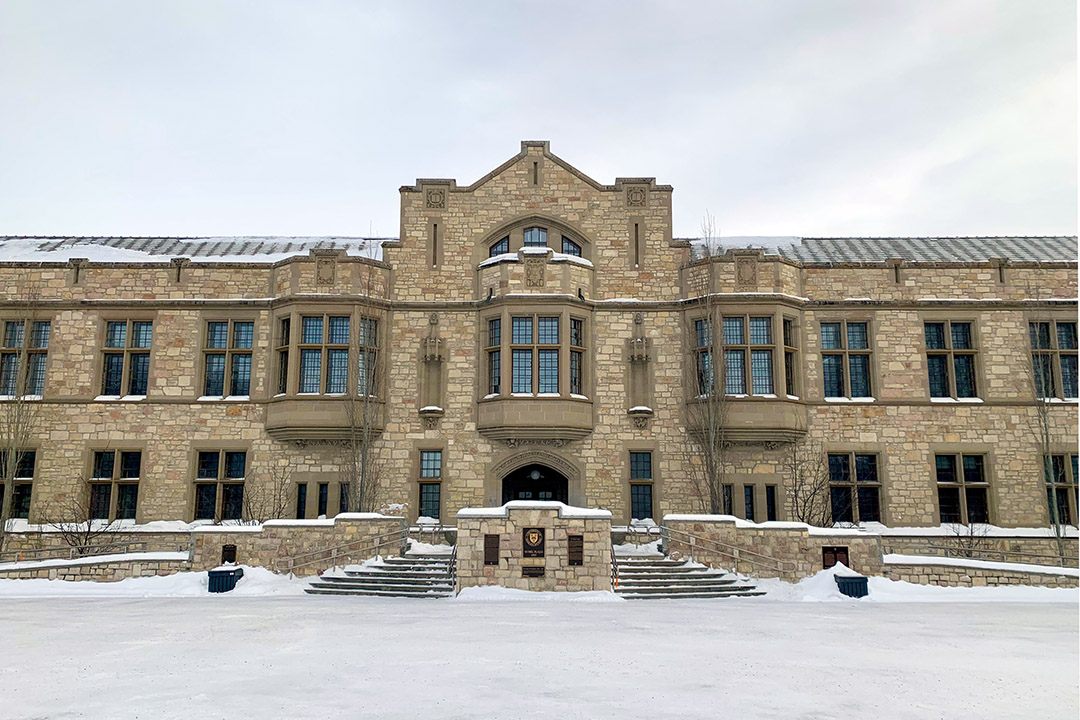
The Post-Degree Bachelor of Science in Nursing is a full-time, six-term option at USask's Saskatoon campus for students with a degree or substantial progress toward one. Applications are currently on hold. The option leads to a Bachelor of Science in Nursing when offered.
- Program
- Post-Degree Bachelor of Science in Nursing (PDBSN)
- Credential
- BSN
- Location
- Saskatoon, Saskatchewan, Canada
- Casper
- Required
- Length
- Six consecutive terms, completing in less than two calendar years
Casper Requirement for University of Saskatchewan Post-Degree BSN
University of Saskatchewan Post-Degree BSN requires Casper for the 2026-2027 cycle.
- Languages
- English
Check available Casper test dates in your Acuity Insights account at takecasper.com.
Applications are currently on hold. Published admission requirements include a situational judgement test, but there is no current PDBSN application or Casper booking deadline. No applicants will be admitted during the announced pause.
Casper format
Casper is an online, open-response situational judgment test run by Acuity Insights. The current format has 11 scenarios (4 video-response and 7 typed-response) with 2 questions each and takes about 65 to 85 minutes, including optional breaks. Typed-response scenarios allow 3.5 minutes to answer both questions.
Practice with Bright Doctor's Casper Question Bank, featuring 100+ scenarios and 300+ expert responses.
University of Saskatchewan Post-Degree BSN Application Deadlines 2026-2027
Applications for the Post-Degree BSN are currently on hold; the program is not accepting applications.
University of Saskatchewan Post-Degree BSN Admissions Statistics
No current PDBSN intake size is published while applications are on hold.
Eligibility Requirements for University of Saskatchewan Post-Degree BSN
- Degree / credits
A recognized baccalaureate degree of at least 90 credit units, or 90 credit units of recognized study toward a bachelor's degree by December 31 before the intended January entry; at least 36 credit units must be senior-level.
- Residency
Applicants from all Canadian provinces and territories and other countries may apply when admissions are open; residency status is not considered in selection.
- Citizenship
International applicants are eligible when admissions are open.
- Language proficiency
English proficiency may need to be demonstrated; applicants identifying English as a second or additional language must provide proof.
Admission pathways
- Indigenous equity access: 16.6% of seats are designated for eligible Indigenous candidates when admissions are open; documented verification of Indigenous membership or citizenship is required.
- Special-case admission: Applicants with an admission average of at least 65% who meet the other requirements may be considered individually when admissions are open.
A completed degree is not required if the 90-credit-unit pathway is met. Applications are currently on hold.
Other requirements
- Prior nursing study: Applicants with at least six credit units of nursing classes in a Canadian nursing program must submit a program reference form.
- Post-admission clinical readiness: Requirements include CPR-C with AED, immunizations, WHMIS, lifting and repositioning training, N95 fit testing, HSPnet consent and a criminal record check with vulnerable-sector search.
Selection Factors University of Saskatchewan Considers
Prerequisites
| Course | Requirement |
|---|---|
| Statistics | 3 credit units |
| Nutrition | 3 credit units Within 10 years. |
| Indigenous Studies | 3 credit units |
| Microbiology | 3 credit units Within 10 years. |
| Anatomy and Physiology | 6 credit units Within 10 years. |
| Humanities | 3 credit units |
| Social Sciences | 6 credit units |
GPA
- How it is calculated
The admission average uses the most recent 60 credit units of coursework toward a degree, including all degree courses within each academic year. For a repeated course within those credits, the most recent grade is used.
- Minimum
- 70% for regular admission; 65% for special-case consideration.
- Competitive
- The admission average may be higher than the minimum, depending on the applicant pool.
Applicants must maintain a final admission average of at least 70%. One deficiency may be permitted in Nutrition, Social Sciences or Indigenous Studies under the published admission rules.
Admissions tests
- English language proficiency (required for some applicants): If required, demonstrate eligible English-medium study or meet the College of Nursing's published TOEFL iBT, IELTS or CAEL minimums.
Experience and volunteer hours
Not required.
No work or volunteer-hour minimum is listed for standard admission; experience may be described in a requested special-case letter.
Supplementary application
Applicants considered for special-case admission may be asked for a résumé and a letter explaining their academic record, experience, education, plans for success and motivation for nursing, plus contact details for three potential references.
How applicants are ranked
When admissions are open, regular applicants are assessed on their most recent 60 credit units toward a degree (60%) and situational judgement test score (40%), subject to other admission requirements. Applications are currently on hold.
Interview Format at University of Saskatchewan
An interview applies to shortlisted applicants seeking special-case admission; no interview is specified for standard applicants. Applications are currently on hold.
- Who is invited
- Shortlisted special-case admission applicants.
Practice under timed, realistic conditions with Bright Doctor's AI Interview Simulator.
Prepare for Casper and Your Interview
Access Bright Doctor's Casper Question Bank with 100+ scenarios and 300+ expert-crafted responses, AI Interview Simulator with realistic practice conditions, and personalized mentorship from current medical students, all on one web-based platform.
Start Practicing FreeCurriculum at University of Saskatchewan Post-Degree BSN
- Program length
- Six consecutive terms, completing in less than two calendar years
- Structure
Full-time intensive undergraduate nursing option over six consecutive terms.
- Campuses
- Saskatoon
The full-time PDBSN option comprises 94 credit units and includes nursing practice and clinical learning. Students are expected to have at least one clinical experience outside Saskatoon.
Campus and facilities
The program operates from the University of Saskatchewan's Saskatoon campus, with clinical affiliations supporting nursing training.
Tuition and Funding at University of Saskatchewan
- Canadian first-year tuition estimate, 2026-27: CAD $13,704
- International first-year tuition estimate, 2026-27: CAD $66,326.40
- Estimated student fees: CAD $1,483.56
- Estimated books and course materials: CAD $1,500
USask's estimates assume a full first-year course load, including Spring; actual costs vary. Applications are currently on hold.
University of Saskatchewan's Mission and Values
The Post-Degree BSN option provides opportunity for full-time intensive study over six consecutive terms with program completion in less than two calendar years.
What Applicants Are Saying
Matriculated students describe the PDBSN as full-time intensive study leading to a full BScN. Program advisors confirm cohorts typically range from 40-52 students. Students who have collaborated with PDBSN cohorts note the program's selectivity. Students report close collaboration between PDBSN and regular BSN cohorts, with academic advisors supporting the intensive pace. Students who worked with PDBSN cohorts advise prioritizing high UGPA in BSN-relevant coursework.
Shared by applicants and students on forums and communities. It is anecdotal, not official program information.
How to Prepare Your University of Saskatchewan Post-Degree BSN Application
- Check whether PDBSN applications have resumed before preparing an application or booking Casper.
- Confirm that your degree or completed credits meet the eligibility rules.
- Review the seven prerequisite subjects and their course-age limits.
- Calculate your admission average using your most recent 60 credit units toward a degree.
- If applicable, prepare proof of English proficiency or a nursing program reference form.
Frequently Asked Questions About University of Saskatchewan Post-Degree BSN
Does University of Saskatchewan Post-Degree BSN require Casper?
Applications are currently on hold. Published requirements include a situational judgement test, but no current PDBSN Casper deadline is posted.
What is the minimum GPA for University of Saskatchewan Post-Degree BSN?
Regular admission requires a minimum 70% average on the most recent 60 credit units toward a degree; special-case consideration may be available from 65%.
How long is the University of Saskatchewan Post-Degree BSN program?
It is full-time over six consecutive terms and takes less than two calendar years.
Are interviews required for University of Saskatchewan Post-Degree BSN?
Only shortlisted special-case applicants are contacted for an interview; no interview is specified for standard applicants.
How many students does University of Saskatchewan Post-Degree BSN accept?
Applications are on hold; no current intake size is published.
Can international students apply to University of Saskatchewan Post-Degree BSN?
The program accepts international applicants when admissions are open, but applications are currently on hold.
What are the Casper test dates for University of Saskatchewan Post-Degree BSN?
No current PDBSN Casper test dates are posted while applications are on hold.
Does University of Saskatchewan Post-Degree BSN have tuition details?
USask publishes first-year tuition estimates for Canadian and international students.
Sources
- USask PDBSN Admissions
- USask College of Nursing PDBSN
- USask 2026-27 Admission Requirements
- USask 2027-28 Admission Requirements
- USask PDBSN University Catalogue
- USask Prerequisite Equivalents
Last updated: September 26, 2026