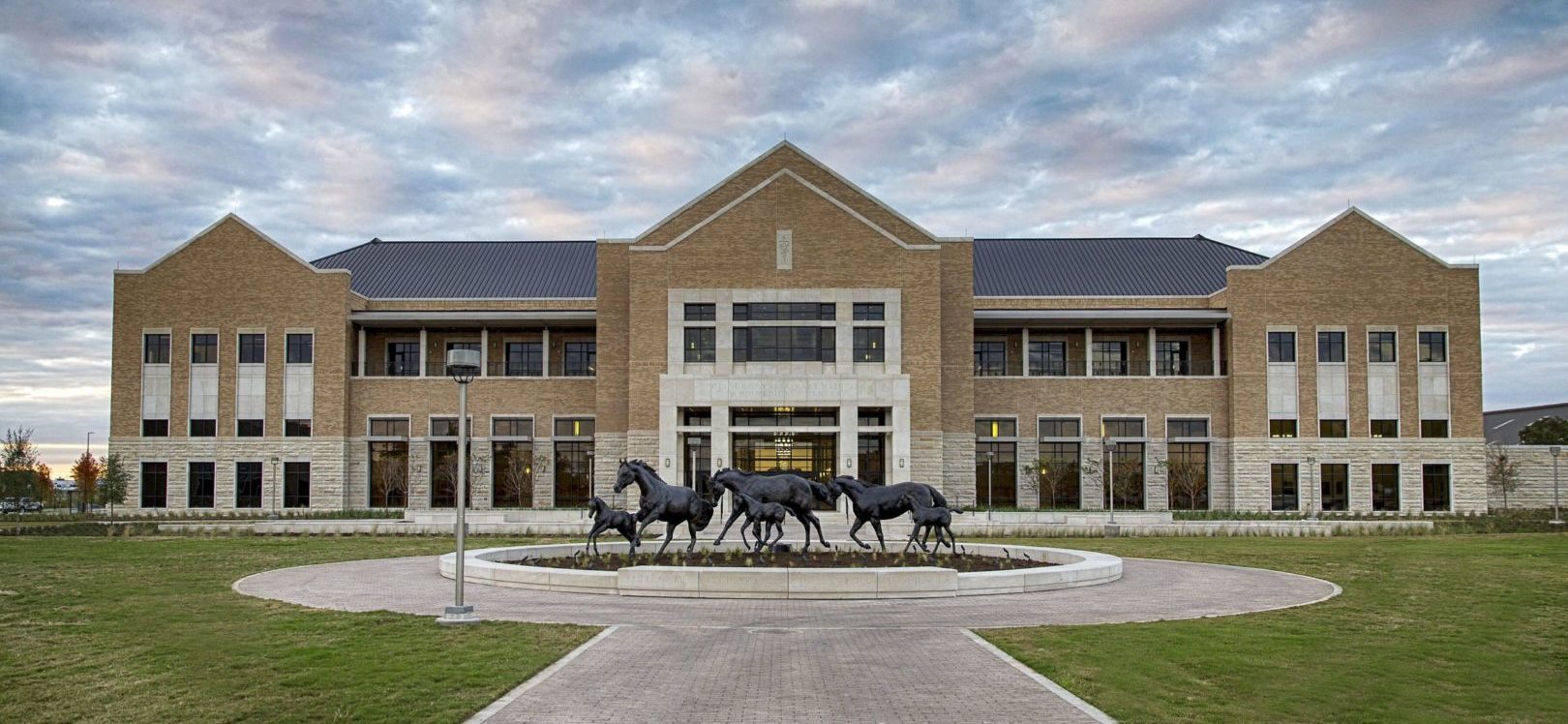
Texas A&M's Doctor of Veterinary Medicine program in College Station uses TMDSAS and a separate VMBS supplemental application. Applicants must complete Casper each application cycle. Selection considers academic performance, veterinary and animal experience, other achievements, evaluations, and multiple mini interviews.
- Program
- Doctor of Veterinary Medicine (DVM)
- Credential
- DVM
- Location
- College Station, Texas, United States
- Casper
- Required
- Next deadline
- August 31, 2027 (Entry-year 2028 application deadline)
- Interview
- Multiple mini interview (MMI)
- Seats
- 180 matriculants
- Length
- Four years
Casper Requirement for Texas A&M University Veterinary Medicine
Texas A&M University Veterinary Medicine requires Casper for the 2027-2028 cycle.
- Languages
- English
- Applicant ID to enter
- TMDSAS Number
- Other Acuity assessments
- Duet (not required), Snapshot (not required)
Check available Casper test dates in your Acuity Insights account at takecasper.com.
Complete Casper each application cycle; prior-cycle scores cannot be reused. Neither Duet nor Snapshot is required.
Casper format
Casper is an online, open-response situational judgment test run by Acuity Insights. The current format has 11 scenarios (4 video-response and 7 typed-response) with 2 questions each and takes about 65 to 85 minutes, including optional breaks. Typed-response scenarios allow 3.5 minutes to answer both questions.
Practice with Bright Doctor's Casper Question Bank, featuring 100+ scenarios and 300+ expert responses.
Texas A&M University Veterinary Medicine Application Deadlines 2027-2028
- Apply through
- TMDSAS
- Applications open
- May 1, 2027
- Application fee
- $235 nonrefundable TMDSAS fee, plus a $75 nonrefundable Texas A&M VMBS supplemental application fee.
| What | When |
|---|---|
| Entry-year 2028 application deadline | August 31, 2027upcoming |
Apply through TMDSAS and submit the separate VMBS supplemental application and fee. Admissions are not rolling.
Texas A&M University Veterinary Medicine Admissions Statistics
Period: Class of 2029 matriculants
- Seats / class size: 180 matriculants
- Average GPA: 3.80 overall; 3.85 last 45 hours; 3.77 science
- Texas residents: 93.3%
- Average age: 23
Eligibility Requirements for Texas A&M University Veterinary Medicine
- Degree / credits
A bachelor's degree is not required; applicants may apply after completing the required prerequisite coursework.
- Residency
Eligible applicants include Texas residents who are U.S. citizens or permanent residents and qualifying U.S. citizens or nationals from other states or territories. Applicants with superior credentials in the latter groups may fill up to 10% of class positions.
- Citizenship
International applicants are not considered. Texas residents pursuing U.S. permanent residence may receive consideration if they obtain it by the applicable cycle deadline.
International applicants are not considered.
Other requirements
- Evaluations: Submit three evaluations through TMDSAS, including at least one from a veterinarian. Evaluators must not be family members.
Selection Factors Texas A&M University Considers
Prerequisites
| Course | Requirement |
|---|---|
| General Biology with lab; General Microbiology with lab | 4 credit hours each C or better; coursework within 10 years. |
| Genetics; Animal Nutrition or Feeds & Feeding | 3 credit hours each Four-year institution only; C or better; coursework within 10 years. |
| General Chemistry with lab; Organic Chemistry with lab | 8 credit hours each C or better; coursework within 10 years. |
| Biochemistry | 3 lecture credit hours Four-year institution only; C or better; coursework within 10 years. |
| Statistics; Physics with lab | 3 and 4 credit hours, respectively C or better; coursework within 10 years. |
| English; Public Speaking | 3 credit hours each C or better; coursework within 10 years; an S is accepted for spring 2020 prerequisites. The full prerequisite list totals 46 credit hours. |
GPA
- How it is calculated
TMDSAS calculates overall, science/BCPM, and last-45-hour GPAs. The last-45-hour calculation includes the entire semester in which the 45th hour falls; at least 45 graded college credits are needed.
- Minimum
- 2.90 overall GPA, 3.10 GPA for the last 45 semester hours, and 2.90 science GPA
- Competitive
- Meeting the minimum GPAs does not guarantee an interview.
You do not need to retake science courses solely for veterinary school if prior grades meet standards, even from community colleges—though four-year credits strengthen your profile.
Admissions tests
- GRE (not required): The GRE is not currently required for DVM admission.
Experience and volunteer hours
Required.
More than 100 hours of veterinary experience under a veterinarian's direct supervision are needed to qualify for an interview. Paid, volunteer, clinical, and research experience can count. Animal experience is scored separately.
Supplementary application
Submit the Texas A&M VMBS supplemental application and its nonrefundable fee without waiting for an invitation.
How applicants are ranked
Applicants are scored and ranked for interview using academics, veterinary and animal experience, and other achievements and evaluations. A final score ranks interviewed applicants: GPA 38%-43%, experience 10%-15%, MMI 20%-25%, and other factors 20%-25%.
Interview Format at Texas A&M University
Format: Multiple mini interview (MMI)
Selected applicants complete virtual, asynchronous multiple mini interviews. Two independent evaluators score each question; assistance from another person or AI is prohibited.
- Who is invited
- Applicants selected after initial scoring and ranking.
Practice under timed, realistic conditions with Bright Doctor's AI Interview Simulator.
Prepare for Casper and Your Interview
Access Bright Doctor's Casper Question Bank with 100+ scenarios and 300+ expert-crafted responses, AI Interview Simulator with realistic practice conditions, and personalized mentorship from current medical students, all on one web-based platform.
Start Practicing FreeCurriculum at Texas A&M University Veterinary Medicine
- Program length
- Four years
- Structure
Preclinical and clinical phases. All five training tracks share 24 weeks of core rotations, each two weeks long, including externship and vacation.
- Campuses
- College Station
A foundation course in companion and large animal care focuses on day-one wellness and preventive medicine. This structure ensures competency in diverse veterinary arts and sciences. The program also prepares students for emergency response through Texas A&M Veterinary Emergency Team training.
Campus and facilities
Located in College Station, Texas. One of the largest DVM programs in the United States.
Tuition and Funding at Texas A&M University
- DVM tuition and fees: Varies by residency and term; use the Texas A&M veterinary tuition calculator for an estimate.
Cost of attendance also includes estimated living expenses and varies with individual circumstances.
Texas A&M University's Mission and Values
The VMBS views the selection of students admitted to the DVM Professional Program as a priority and a responsibility to Texas A&M and the veterinary profession. The professional curriculum seeks to deliver to the veterinary medical profession a student fully prepared to begin a medical career in the arts and sciences.
The VMBS views the selection of students admitted to the DVM Professional Program as a priority and a responsibility to Texas A&M and the veterinary profession.
What Applicants Are Saying
Matriculated students describe a minimum of 755 hours of veterinary experience as sufficient, though the committee focuses on the first 200 hours to confirm awareness of the profession. Competitive candidates complete prerequisites at four-year institutions, as community college coursework raises concerns for some reviewers.
Shared by applicants and students on forums and communities. It is anecdotal, not official program information.
How to Prepare Your Texas A&M University Veterinary Medicine Application
- Verify prerequisites early and complete required courses with a C or better within 10 years, preferably at a four-year institution.
- Accumulate 200+ veterinary hours in varied settings, keeping in mind that reviewers emphasize the first 200 hours.
- Book an English Casper test well before the score distribution deadline and complete at least 50 practice scenarios to build familiarity with ethical and interpersonal themes; many applicants use Bright Doctor's Casper Question Bank to simulate timed conditions.
- If invited to interview, prepare with realistic simulations.
- Start 12-18 months before the TMDSAS deadline and submit on time to enter holistic review.
More About Texas A&M University Veterinary Medicine
- Program size
One of the largest DVM programs in the United States
- Spring 2020 grades
S is accepted for spring 2020 courses in place of C or better for prerequisites
Frequently Asked Questions About Texas A&M University Veterinary Medicine
Does Texas A&M DVM require Casper?
Yes. Complete Casper for each application cycle; Duet and Snapshot are not required.
What are the minimum GPAs?
2.90 overall, 3.10 for the last 45 semester hours, and 2.90 science.
How much veterinary experience is required?
More than 100 hours under a veterinarian's direct supervision are needed to qualify for an interview.
Are community college prerequisites accepted?
Yes, for applicable courses; genetics, animal nutrition, and biochemistry must come from a four-year institution.
What is the DVM curriculum structure?
Four years: three preclinical years followed by a clinical year.
How much is tuition?
Tuition varies by residency and term; use Texas A&M's veterinary tuition calculator.
Is there an interview?
Selected applicants complete virtual, asynchronous multiple mini interviews.
Can international students apply?
International applicants are not considered; see the school's residency requirements for permanent-residence eligibility.
Sources
- vetmed.tamu.edu: prerequisites
- vetmed.tamu.edu: faqs
- vetmed.tamu.edu: tamu
- vetmed.tamu.edu: eligibility
- vetmed.tamu.edu: 2025DVMCard020525
- bemoacademicconsulting.com: veterinary school acceptance rates
- vetmed.tamu.edu: Supplemental Materials 3 TAMU DVM Curriculum Digest
- vetmed.tamu.edu: curriculum
- grad.tamu.edu: veterinary medicine
- vetmed.tamu.edu: Supplemental Materials 5 TAMU 4VM Orientation Materials 2022 2023
- animalscience.tamu.edu: mock interviews prepare animal science students for vet school application process
- medicine.tamu.edu: interview tips and techniques 7 30 20
Last updated: September 26, 2026