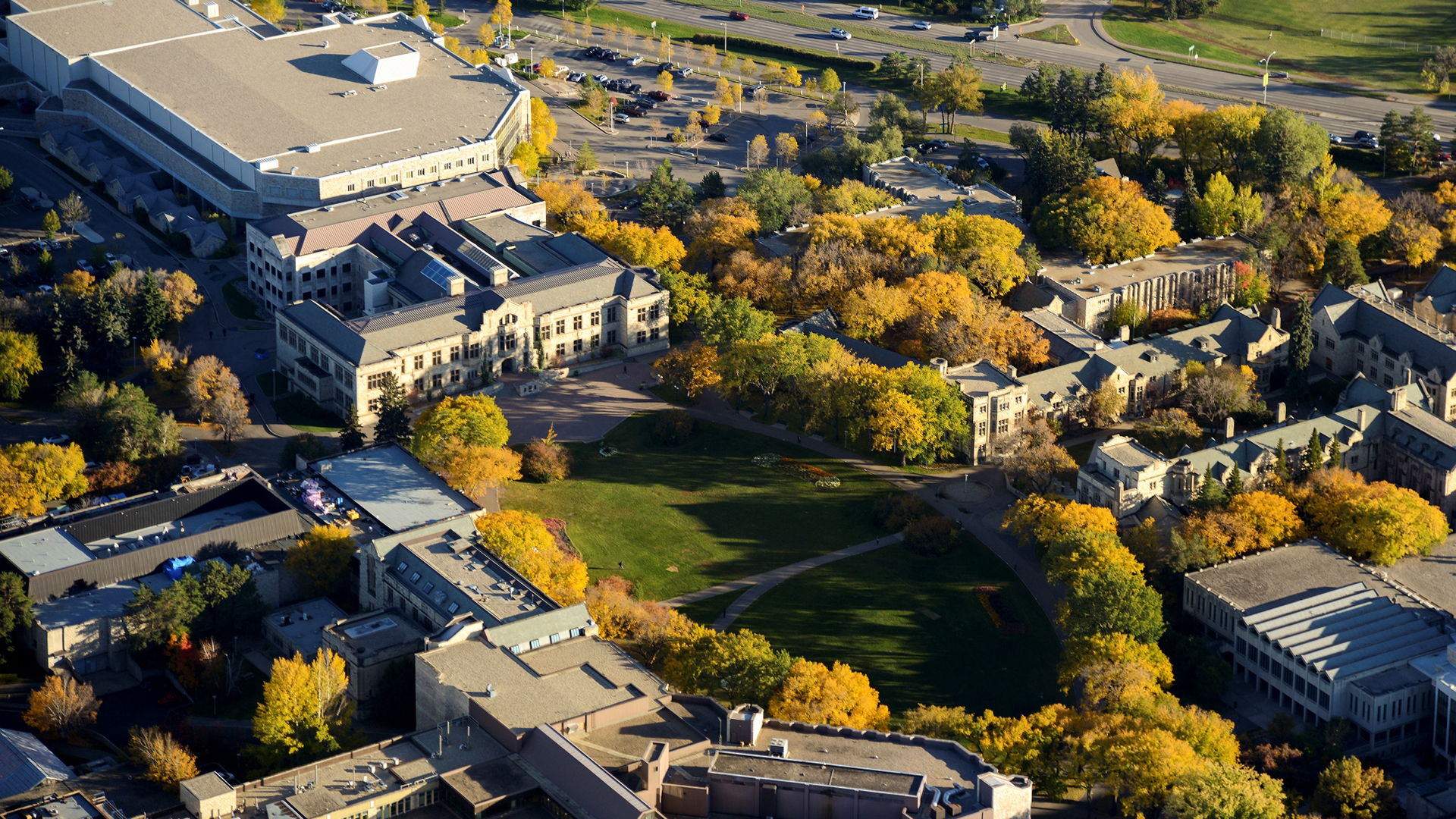
The University of Saskatchewan offers a full-time, in-person Master of Occupational Therapy in Saskatoon. Admission is restricted to eligible Canadian citizens and permanent residents. Applicants need a qualifying degree, admission average and prerequisites, and must complete Casper and a personal statement. The program includes extensive clinical placements across Saskatchewan.
- Program
- Master of Occupational Therapy (MOT)
- Credential
- MOT
- Location
- Saskatoon, Saskatchewan, Canada
- Casper
- Required
- Next deadline
- December 15, 2026 (Application deadline)
- Interview
- No interview
- Seats
- 40 seats, including 8 designated for Indigenous applicants
- Length
- 27 months
Casper Requirement for University of Saskatchewan Occupational Therapy
University of Saskatchewan Occupational Therapy requires Casper for the 2026-2027 cycle.
- Test to book
- Canada Casper 2 (English)
- Languages
- English
- Distribution fee
- Acuity charges a fee for each program receiving Casper results; check its Dates and Fees page for the current amount.
Check available Casper test dates in your Acuity Insights account at takecasper.com.
Casper is required each admission cycle; a previous cycle's result cannot be reused. Confirm program-specific booking details with Acuity Insights.
Casper format
Casper is an online, open-response situational judgment test run by Acuity Insights. The current format has 11 scenarios (4 video-response and 7 typed-response) with 2 questions each and takes about 65 to 85 minutes, including optional breaks. Typed-response scenarios allow 3.5 minutes to answer both questions.
Practice with Bright Doctor's Casper Question Bank, featuring 100+ scenarios and 300+ expert responses.
University of Saskatchewan Occupational Therapy Application Deadlines 2026-2027
- Apply through
- University of Saskatchewan online graduate application
- Applications open
- Mid-September
- Application fee
- $125 CAD, non-refundable
| What | When |
|---|---|
| Application deadline | December 15, 2026upcoming |
| Personal-statement prompt sent | January 4, 2027upcoming |
| Personal-statement deadline | January 18, 2027upcoming |
| Equivalent-course approval deadline | January 31, 2027upcoming |
| Supporting-documents deadline | May 15, 2027upcoming |
After paying, upload unofficial PDF transcripts from each post-secondary institution attended, including in-progress courses; include the grading legend and a certified translation when needed. USask undergraduate graduates need not submit transcripts. Official transcripts are required only after an offer.
University of Saskatchewan Occupational Therapy Admissions Statistics
Period: Annual intake
- Seats / class size: 40 seats, including 8 designated for Indigenous applicants
Eligibility Requirements for University of Saskatchewan Occupational Therapy
- Degree / credits
Bachelor's degree from a recognized institution
- Residency
General-pool applicants must qualify as residents of Saskatchewan, Yukon, Northwest Territories or Nunavut; the admissions committee may waive this requirement. Indigenous-designated seats have separate citizenship and verification requirements.
- Citizenship
Canadian citizens or permanent residents of Canada only. Applicants for Indigenous-designated seats must be Canadian citizens.
- Language proficiency
Applicants whose first language is not English may need proof of proficiency: TOEFL 4.5/6.0 in each component and 5.0 combined, or IELTS 7.5 in each area and overall.
International students are not eligible for admission.
Other requirements
- Transcripts: Upload applicable unofficial transcripts with grading legends; provide official copies after an offer.
- Post-acceptance clinical-placement clearance: Maintain CPR certification; meet immunization and respirator-fit requirements; complete police/criminal-record and vulnerable-sector checks, and required placement agreements.
Selection Factors University of Saskatchewan Considers
Prerequisites
| Course | Requirement |
|---|---|
| Human Anatomy or Neuroanatomy | 3 credit units At least 70%. |
| Indigenous Studies | 3 credit units At least 70%. |
| Statistics | 3 credit units At least 70%. |
| Behavioural Science | 3 credit units of Psychology or Sociology At least 70%. |
GPA
- How it is calculated
Cumulative weighted average in the most recent 60 graded credit units at application.
- Minimum
- At least 70% in the most recent 60 graded credit units; at least 70% in each prerequisite and 75% across prerequisites.
Prerequisite grades are assessed separately from the admission average.
Admissions tests
- TOEFL (required for some applicants): If English proficiency proof is required: at least 4.5/6.0 in each component and 5.0 combined.
- IELTS (required for some applicants): If English proficiency proof is required: at least 7.5/9 in each area and overall.
Experience and volunteer hours
Not required.
No occupational-therapy work, shadowing or volunteer hours are listed as an admission requirement or selection component.
Supplementary application
Required personal statement: answer the admissions committee's annual prompt about becoming an OT and/or attending this MOT program in 300 words or fewer; sign an academic-integrity statement when submitting. Reference letters are neither required nor accepted.
How applicants are ranked
Admission ranking: academic assessment 60%, Casper 32%, personal statement 8%. Offers go to the top 32 general-pool applicants and eight applicants for Indigenous-designated seats; Indigenous applicants are considered in the general pool first.
Interview Format at University of Saskatchewan
Format: No interview
No interview is listed in the published admission requirements or selection formula.
Prepare for Casper and Your Interview
Access Bright Doctor's Casper Question Bank with 100+ scenarios and 300+ expert-crafted responses, AI Interview Simulator with realistic practice conditions, and personalized mentorship from current medical students, all on one web-based platform.
Start Practicing FreeCurriculum at University of Saskatchewan Occupational Therapy
- Program length
- 27 months
- Structure
Full-time, in-person coursework, labs and 30 weeks of clinical placements, totalling more than 1,000 clinical hours.
- Campuses
- Saskatoon
Clinical placements include urban and rural communities; students cover travel and accommodation costs for placements outside Saskatoon.
Campus and facilities
In-person study in Saskatoon through the School of Rehabilitation Science, with required clinical placements across Saskatchewan, including urban and rural communities.
Tuition and Funding at University of Saskatchewan
- Canadian-student tuition, 2026-2027: $3,709 CAD per term
Student fees are additional. Students pay travel and accommodation costs for required clinical placements; tuition rates may increase annually.
University of Saskatchewan's Mission and Values
The program emphasizes serving provincial healthcare needs. This focus shapes its curriculum and fieldwork, positioning graduates to fill gaps in community and clinical settings. As Canada's newest OT academic program under full University approval, it integrates competency-based training with real-world application from day one.
What Applicants Are Saying
Students report high demand for occupational therapists across Saskatchewan. Matriculated students describe the program as "huge for our province" where OTs are urgently required, and highlight excitement for provincial impact, with networks aiding fieldwork and job placement. You join a tight-knit community of OT students and practitioners, fostering discussions on coursework and careers.
Shared by applicants and students on forums and communities. It is anecdotal, not official program information.
How to Prepare Your University of Saskatchewan Occupational Therapy Application
- Check citizenship and residency eligibility before applying.
- Calculate the average for your most recent 60 graded credits; check each prerequisite and the overall prerequisite average.
- Request approval for unlisted equivalent courses.
- Book the required Casper type and check Acuity for current sittings and distribution details.
- Prepare the required short personal statement and upload applicable transcripts.
More About University of Saskatchewan Occupational Therapy
- Newest program
Newest occupational therapy academic program in Canada, under full University approval.
- Provincial need
Addresses a critical provincial need for occupational therapists.
Frequently Asked Questions About University of Saskatchewan Occupational Therapy
Is Casper required for University of Saskatchewan Occupational Therapy?
Yes. Applicants must take Casper for the current admission cycle; check Acuity for the program's available dates and distribution deadline.
What is the minimum GPA for University of Saskatchewan OT admissions?
At least 70% across the most recent 60 graded credits, plus 70% in each prerequisite and 75% across prerequisites.
Does University of Saskatchewan Occupational Therapy require interviews?
No interview is listed in the published admission requirements or selection formula.
What are University of Saskatchewan OT tuition costs?
Published Canadian-student tuition is $3,709 CAD per term for 2026-2027, plus student fees and applicable placement travel and accommodation costs.
Can international students apply to University of Saskatchewan Occupational Therapy?
No. The program is open only to Canadian citizens and permanent residents; Indigenous-designated seats require Canadian citizenship.
How competitive is University of Saskatchewan OT admissions?
Offers are ranked using the admission average (60%), Casper (32%) and personal statement (8%); 40 seats are offered annually.
What is the Casper format for University of Saskatchewan applications?
The required assessment is Casper; select the program's Canada Casper 2 (English) test type when booking.
When do personal statements release for University of Saskatchewan OT?
The annual prompt is sent to applicants on January 4 and the response is due January 18.
Sources
- USask MOT admissions
- USask MOT program
- USask MOT catalogue
- USask graduate tuition
- Acuity Casper test types
- Acuity Casper fees
Last updated: September 26, 2026