Penn College's Biomedical Sciences B.S. is an undergraduate route for students interested in biomedical careers or later health-professions study, including physician assistant education. Its curriculum incorporates prerequisites for Penn College's separate PA master's program. The bachelor's major has no special admission requirements and does not require Casper.
- Program
- Biomedical Sciences
- Credential
- BS
- Location
- Williamsport, Pennsylvania, United States
- Casper
- Not required
- Next deadline
- February 1, 2027 (First-year fall priority)
- Interview
- No interview
- Length
- Eight semesters
Casper Requirement for Pennsylvania College of Technology Pre-Physician Assistant
Pennsylvania College of Technology Pre-Physician Assistant does not require Casper for the 2026-2027 cycle.
Casper is not required for admission to the Biomedical Sciences bachelor's degree. Penn College's Physician Assistant Studies master's has a separate admissions process.
Pennsylvania College of Technology Pre-Physician Assistant Application Deadlines 2026-2027
- Apply through
- Penn College Application or Common App for first-year students; Penn College Application for transfers
- Applications open
- Open for Fall 2027
- Application fee
- $0
| What | When |
|---|---|
| First-year fall priority | February 1, 2027upcoming |
| Transfer fall priority | February 1, 2027upcoming |
| F-1 international fall application, materials, placement and enrollment confirmation | May 1, 2027upcoming |
| First-year fall recommended | July 1, 2027upcoming |
| Transfer fall recommended | August 1, 2027upcoming |
First-year applicants submit a high school transcript and, after graduation, an official final transcript. Transfers submit transcripts from every college attended. Applicants must meet placement requirements before confirming enrollment; the enrollment deposit is $150 and non-refundable.
Eligibility Requirements for Pennsylvania College of Technology Pre-Physician Assistant
- Degree / credits
First-year applicants provide a high school transcript and proof of graduation or an accepted high school equivalency. Transfers provide transcripts from colleges attended. Biomedical Sciences has no special admission requirements.
- Residency
In-state and out-of-state applicants may apply.
- Citizenship
International students may apply. Applicants planning to study on an F-1 visa must complete the application, supporting materials, placement and enrollment confirmation by the fall international deadline.
- Language proficiency
International applicants can demonstrate proficiency with TOEFL iBT 74, IELTS Academic 6.0, Duolingo English Test 100, PTE 49, SAT Evidence-Based Reading and Writing 550, or another qualifying educational route listed by Penn College.
Biomedical Sciences is an undergraduate degree that prepares students to apply separately to PA graduate programs.
Other requirements
- Placement: Meet Penn College's math placement requirements before confirming enrollment; qualifying transfer credit or SAT/ACT scores may affect testing.
Selection Factors Pennsylvania College of Technology Considers
GPA
- How it is calculated
No major-specific admission GPA calculation is published.
Biomedical Sciences has no special admission requirements. Once enrolled, students must earn at least a C (2.0) in specified science, mathematics, health and biomedical-elective courses.
Admissions tests
- SAT or ACT (not required): Not required for admission to this major. Qualifying math scores may affect placement testing.
- English proficiency (required for some applicants): International applicants demonstrate English proficiency through an accepted score or qualifying education.
Experience and volunteer hours
Not required.
No volunteer, shadowing or patient-care hours are required for admission to Biomedical Sciences.
Supplementary application
No major-specific essay, healthcare résumé or PA reference letters are listed for undergraduate admission.
How applicants are ranked
Penn College uses open, rolling undergraduate admission. Biomedical Sciences has no special admission requirements; applicants submit the standard application and materials and meet placement requirements.
Interview Format at Pennsylvania College of Technology
Format: No interview
No major-specific undergraduate interview is listed.
Prepare for Your Admissions Interview
Access Bright Doctor's AI Interview Simulator with realistic practice conditions and personalized mentorship from current medical students, all on one web-based platform.
Start Practicing FreeCurriculum at Pennsylvania College of Technology Pre-Physician Assistant
- Program length
- Eight semesters
- Structure
Biomedical Sciences B.S.: 121 credits across 37 courses, with biology, anatomy and physiology, chemistry, mathematics and other undergraduate coursework.
- Campuses
- Williamsport
The degree includes prerequisites for Penn College's separate Physician Assistant Studies master's program; completing the bachelor's degree does not itself confer admission to the master's.
Campus and facilities
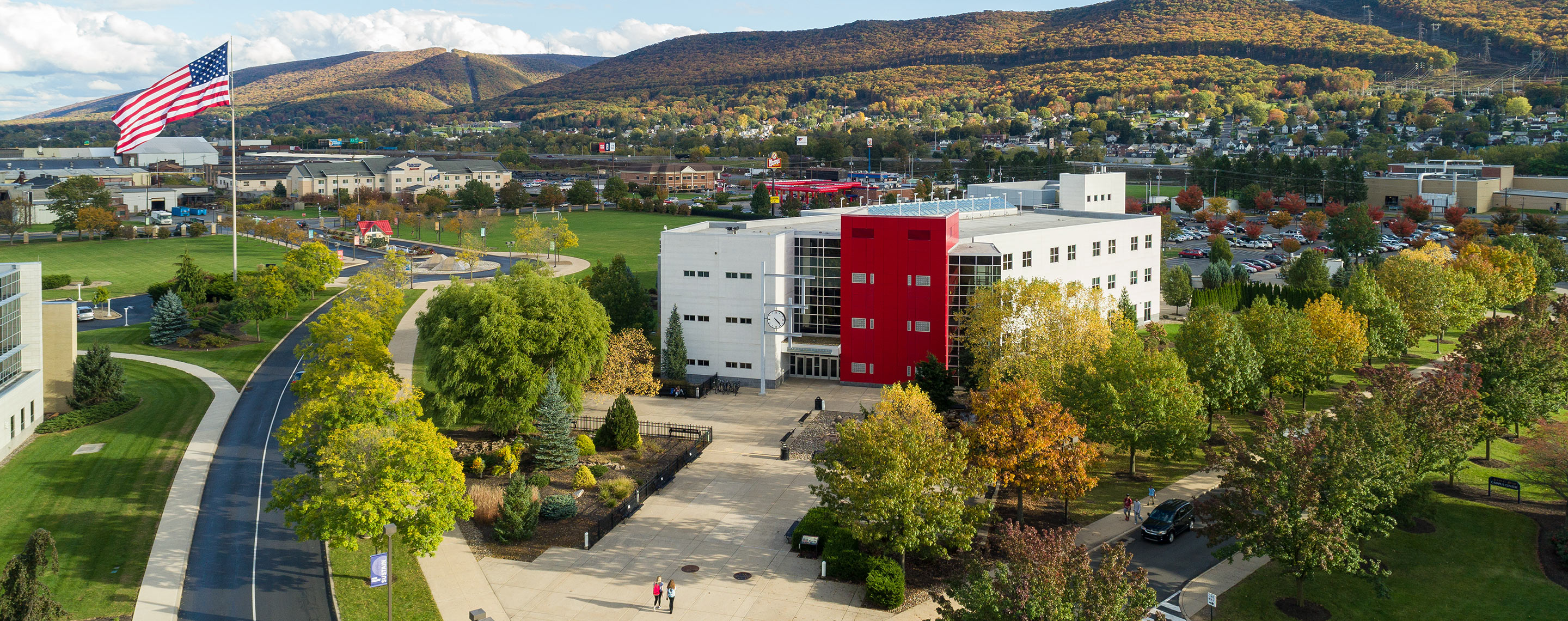
Located in Williamsport, Pennsylvania, the 938-acre campus prioritizes applied learning. Key facilities include STEM labs for biomedical simulations and health sciences buildings affiliated with local clinics. Hands-on equipment is available from day one. Clinical affiliations support shadowing. Campus culture is practical and career-focused, with modern STEM labs, pre-health clubs, and volunteering opportunities.
Tuition and Funding at Pennsylvania College of Technology
- Published 2026-27 in-state tuition and mandatory fees, fall per credit: $631
- Published 2026-27 out-of-state tuition and mandatory fees, fall per credit: $896
- Published 2026-27 in-state tuition and mandatory fees, spring per credit: $640
- Published 2026-27 out-of-state tuition and mandatory fees, spring per credit: $910
These published per-credit rates are not prices for the upcoming entry term. Annual cost depends on course load and applicable fees; rates for the upcoming entry term are not yet published here.
What Applicants Are Saying
Matriculated students describe the program as accessible for career changers building patient care experience. One alum from four years in healthcare advertising credited the program for igniting their PA path. Matriculated students describe supportive peers discussing PCE strategies, from hospice (70 hours minimum) to paid roles. Students report curriculum depth comparable to PA school didactics. Pre-PA communities and forums stress contacting an advisor early and using summers for shadowing and PCE.
Shared by applicants and students on forums and communities. It is anecdotal, not official program information.
How to Prepare Your Pennsylvania College of Technology Pre-Physician Assistant Application
- Apply to Penn College's Biomedical Sciences B.S. through the appropriate undergraduate application route.
- Arrange for the required high school or college transcripts to be sent to Penn College.
- Complete any required math placement steps before confirming enrollment.
- Review the bachelor's curriculum with an adviser if you plan to apply later to a PA master's program.
More About Pennsylvania College of Technology Pre-Physician Assistant
- Undergraduate curriculum
121 credits over eight semesters
- Separate graduate pathway
Biomedical Sciences students apply separately for admission to Physician Assistant Studies
Frequently Asked Questions About Pennsylvania College of Technology Pre-Physician Assistant
Does Penn College Biomedical Sciences require Casper?
No. Casper is not required for admission to the Biomedical Sciences bachelor's degree.
What GPA do I need?
Penn College lists no special admission GPA minimum for this major.
Is patient-care experience required?
No patient-care or volunteer hours are required for undergraduate admission.
Is there an admission interview?
No major-specific undergraduate interview is listed.
How much is tuition?
Published tuition and mandatory fees are $631 per fall credit for in-state students and $896 for out-of-state students; rates for the upcoming entry term are not yet published here.
Can international students apply?
Yes. International applicants must meet Penn College's transcript, English-proficiency and immigration-document requirements.
Does the degree prepare students for PA school?
Yes. Its curriculum includes prerequisites for Penn College's separate PA master's.
How competitive is admission?
Penn College lists no special admission requirements for Biomedical Sciences.
Sources
- Biomedical Sciences
- First-Year Students
- Transfer Students
- International Students
- Meet Placement Requirements
- Tuition, Fees, and Charges (2026-27)
- Physician Assistant Studies
- Penn College updates physician assistant program admission
Last updated: September 26, 2026